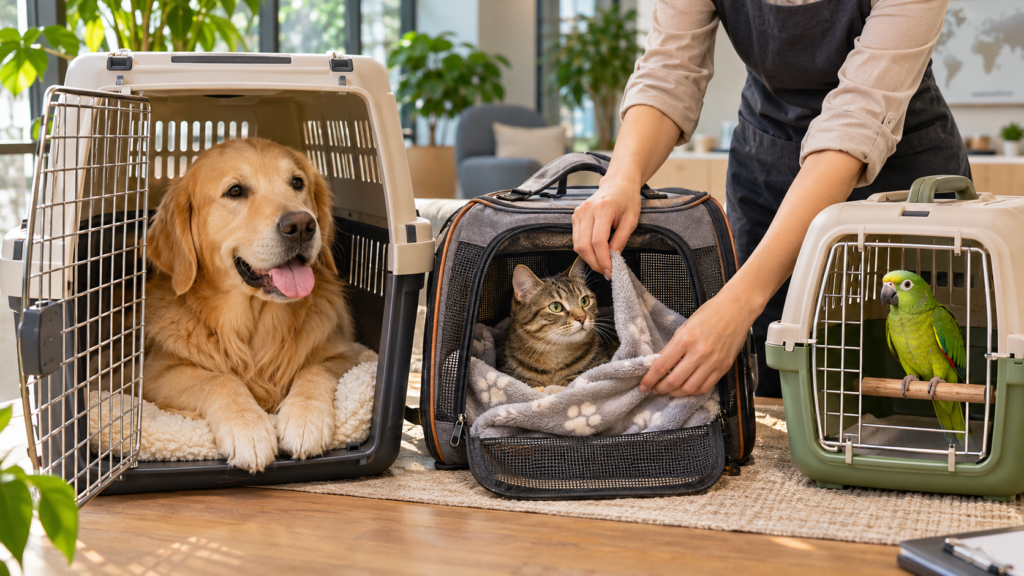
Moving with a beloved dog, cat or parrot takes more planning than moving an ordinary box. Different species, departure and destination countries, carriers and routes have distinct welfare and entry requirements. This pet relocation checklist helps families prepare questions, documents and travel arrangements before committing to a schedule.
Start with the exact route, species and travel date
The right process depends on whether your animal will cross a state line, fly domestically, or enter another country. Confirm the origin and destination, proposed date, species, breed, age, size, health condition and whether your pet can travel in an airline-approved carrier. Do not book a nonrefundable route before checking the relevant authority and carrier rules.
For travel from the United States to another country, the USDA Animal and Plant Health Inspection Service (APHIS) provides country-specific export information. Requirements may include a health certificate, laboratory testing, vaccinations, identification, endorsements or additional permits. They vary by destination and can change.
Pet paperwork: what to check early
- Veterinary appointment: ask a qualified veterinarian what examination, vaccination, documentation and travel fitness checks are appropriate.
- Identification: verify any microchip format or identification required by the destination.
- Health certificate: confirm the required form, signatory and validity window rather than assuming one certificate works everywhere.
- Import/export approval: check government permits, quarantine or inspection rules for the full itinerary, including transit points.
- Carrier acceptance: obtain explicit confirmation of species, crate type, temperature restrictions, booking cutoffs and handover procedure.
Use the USDA pet travel process overview as a starting point, then verify the rules of the destination authority and actual transportation provider.
Dogs: check changing entry requirements
If a dog is coming into the United States, consult the CDC’s current dog import rules. The requirements can depend on where the dog has been and other eligibility factors. A health certificate, vaccination record or airline acceptance does not automatically satisfy every entry rule. Breed-specific transport limitations may also apply with some providers.
Cats: comfort, handling and health
Ask your veterinarian about travel readiness, hydration and feeding instructions. Let your cat become familiar with its travel carrier in advance. Include absorbent bedding where allowed, use secure closures and identify the carrier clearly. Never sedate an animal for transportation without direct advice from its veterinarian and the carrier’s acceptance of that plan.
Parrots and other birds: permits can be especially important
A parrot is not necessarily handled under the same rules as a dog or cat. Some bird species are covered by the Convention on International Trade in Endangered Species (CITES) and may require wildlife permits in addition to veterinary documents. The U.S. Fish and Wildlife Service explains CITES permitting. Confirm the species precisely (including scientific name when requested), country rules and carrier policy well in advance. Do not assume an airline accepts live birds on a particular route.
Choose and prepare the travel enclosure
The carrier’s exact enclosure specifications control. In general, the pet should have a secure, ventilated and appropriately sized container that permits normal positioning, with reliable fasteners and suitable absorbent material. Check food and water arrangements and whether labeling or bowls must be accessible from outside. Do not use a crate simply because it looks attractive—it must satisfy the real transport rules.
Build a humane travel-day plan
- Reconfirm the booking and required papers with the carrier and authorities.
- Record the pet’s normal feeding, medication and veterinary contact information.
- Plan comfortable ground transfers, safe handling and appropriate breaks.
- Discuss weather and route disruptions in advance, and know who can make welfare decisions if schedules change.
- Keep current photos, identification and emergency contact details with the responsible parties.
How GoCargo handles pet-related inquiries
GoCargo can review a request for an eligible animal or pet move and explain whether suitable transportation arrangements can be discussed. Acceptance is not automatic. Species restrictions, lawful documentation, authorized providers, weather and the route all matter. Our quote is personalized after the necessary details have been reviewed; no pet transportation or veterinary compliance outcome is guaranteed by a website form.
Planning a move with a dog, cat, parrot or another animal? Send the species, route and date in a quote request so our team can discuss the requirements and next steps by email.
Sources: USDA APHIS Pet Travel, CDC Dog Importation, U.S. Fish & Wildlife Service CITES FAQs. This is general planning information, not veterinary or legal advice.