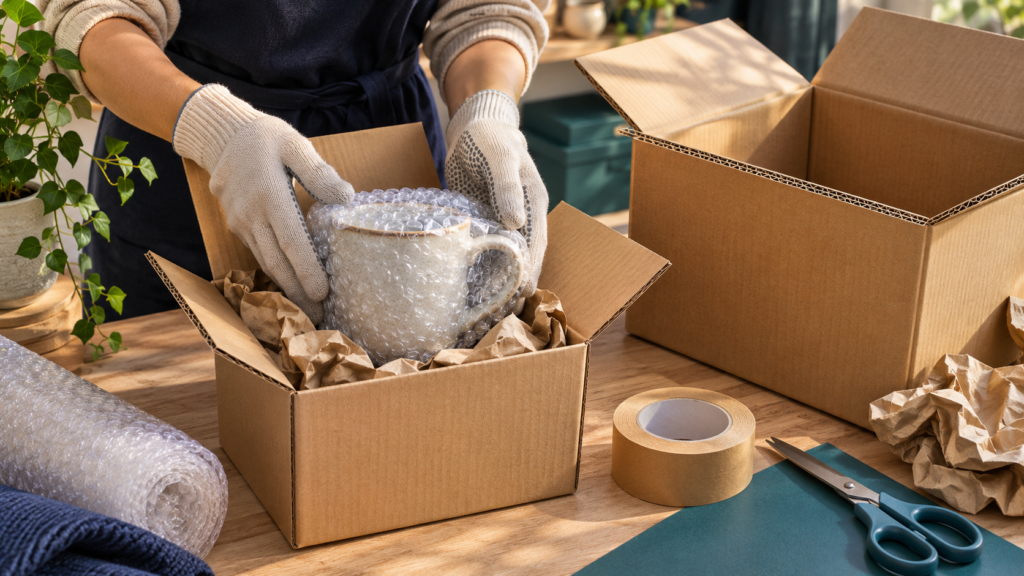
Even a beautiful item can arrive damaged if it is free to move inside a weak carton. To pack fragile items for shipping, think of the box as a system: an outer shell, protective cushioning, separation between pieces, strong closure and an accurate description of contents.
Start with the item, not the box
Look for weak points such as a mug handle, glass rim, picture-frame corner or a protruding electronic connector. Photograph the condition before packing and remove loose accessories. If the item has batteries, liquids, sharp edges or another regulated component, check the chosen carrier’s specific acceptance rules first; ordinary fragile-item guidance is not permission to ship restricted goods.
Choose a sturdy, correctly sized outer carton
Use a clean, strong corrugated box suitable for the weight. Reused boxes with crushed corners, water damage or weak seams are a false economy. The container should leave room for cushioning on every side without so much empty space that the contents can travel. For expensive or especially delicate items, consider double boxing: a padded inner box suspended in cushioning inside a larger, sturdy carton. Follow the carrier’s current packaging guidelines.
Wrap and separate each object
Wrap ceramics, glass and similar items individually with suitable protective material. Support hollow sections and delicate projections without placing direct pressure on them. Place a cushioning layer on the bottom, position the wrapped item centrally and fill the gaps on all sides. If two objects share a box, put a resilient divider between them so they cannot collide. For electronics, follow manufacturer recommendations for antistatic protection and batteries.
Double boxing: when it helps
For a delicate lamp, collectible or glass piece, first pack the object snugly in an inner carton. Then place that carton inside a larger one with protective material above, below and on each side. The outer shell helps absorb handling forces before they reach the item. Keep packages within the carrier’s size and weight limits. Never assume a “fragile” sticker substitutes for physical protection.
Seal the box and perform a careful movement check
Use pressure-sensitive packing tape designed for cartons, typically sealing the central seam and edges in an H pattern. Do not use household masking tape or twine. Gently test whether any contents shift; if you feel movement, reopen and add appropriate cushioning. A final check should confirm the box is closed flat, labels will remain visible and no sharp corners press against the cardboard.
Pre-shipment packing checklist
- Document item condition and note its approximate value.
- Select clean, undamaged corrugated packaging.
- Protect every fragile surface and keep pieces separated.
- Leave cushioning between the product and all six box faces.
- Check movement, seams, tape and exposed edges.
- Measure and weigh the final sealed carton.
- Confirm any declared-value coverage, exclusions and claims requirements.
Frequently asked questions
Does writing FRAGILE on the outside guarantee special handling?
No. Labels can help communicate handling intent, but they are not a substitute for proper packaging or a guaranteed handling service.
Is bubble wrap enough for glass?
Bubble wrap alone may not prevent movement or crushing. A sturdy outer carton, ample void fill and separation are equally important.
Need help shipping an unusual item? Review GoCargo parcel and freight solutions and request a tailored quote. Supply dimensions, weight and packing photos so eligibility can be assessed.