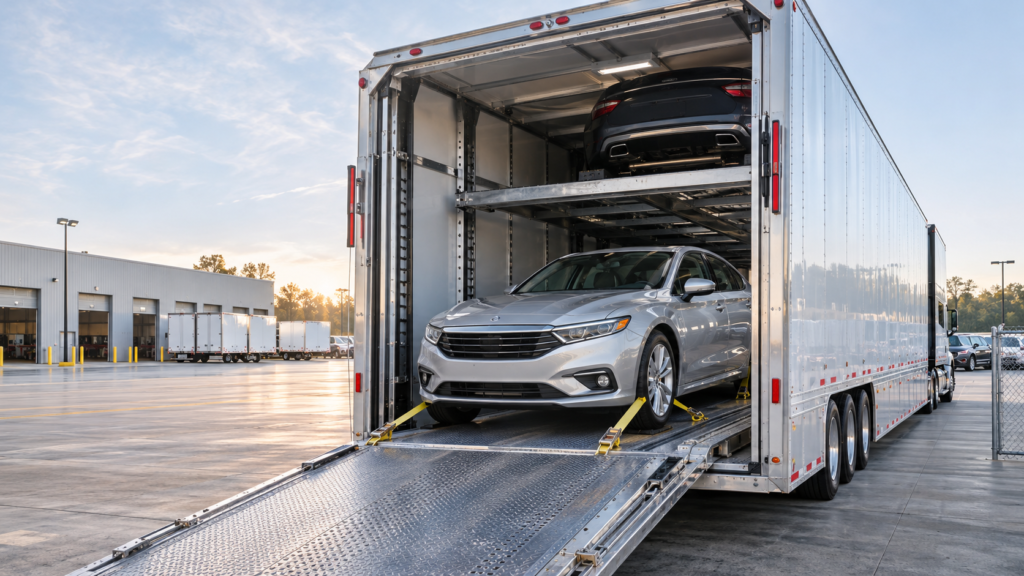
Whether you are relocating, buying a vehicle from another state, or sending a car to a family member, a little preparation can make vehicle transport far less stressful. This practical car shipping checklist covers what to ask before booking, how to prepare the vehicle, and what to check at pickup and delivery.
1. Identify the transport service you actually need
Start with the pickup and delivery ZIP codes, vehicle year, make, model, and whether it runs, steers, and brakes. Tell your shipping coordinator about modifications, low ground clearance, oversized tires, or anything that affects loading. An open automobile transporter and an enclosed transporter have different handling considerations; availability and pricing depend on the particular shipment.
Ask whether the party arranging transportation is acting as a motor carrier or a broker. In the United States, the Federal Motor Carrier Safety Administration (FMCSA) recommends that consumers verify an auto transport company’s registration and understand the carrier/broker distinction. Request the actual transport provider’s details before release when applicable, and ask what insurance documentation is available.
2. Gather the essentials for a reliable quote
- Route: complete pickup and destination addresses or ZIP codes, plus any site access restrictions.
- Vehicle: make, model, year, approximate dimensions, operable or inoperable status, and current condition.
- Timing: desired pickup window and any firm delivery constraints.
- Access: whether a large truck can safely reach each location; a nearby meeting point may be needed.
- Special care: enclosed transport preferences, nonstandard vehicles, and existing damage you want documented.
With GoCargo Logistics, shipping rates are quoted individually after we review your request. We do not publish a one-size-fits-all auto transport price or promise that an estimate is a confirmed carrier rate. Request a shipping quote with the route and vehicle details for a response by email.
3. Prepare the car before collection
- Clean the exterior enough to inspect the paint, body panels, and glass.
- Photograph all sides, wheels, odometer, interior condition, and any existing scratches or dents. Keep timestamped copies.
- Remove valuables, loose items, toll transponders, and aftermarket accessories that could detach. Ask the transport provider about its rules for personal belongings.
- Check for visible fluid leaks and disclose mechanical problems in advance. Confirm the fuel-level and battery requirements with the assigned transporter rather than guessing.
- Fold or secure mirrors and antennas only where appropriate for your vehicle. Keep a working key available for handover.
4. Treat pickup as an important inspection
At pickup, review the vehicle condition together with the driver or authorized representative. Read the bill of lading or inspection report, confirm the vehicle identity, and record any existing damage before signing. A clear pickup record helps everyone compare the vehicle’s condition at arrival.
5. Know how location updates work
A tracking page can help you follow reported shipment milestones, but a map pin alone is not proof that a driver is transmitting continuous satellite GPS. For GoCargo shipments, location information reflects the latest verified transport or dispatch update entered by the operations team; the displayed location may not represent the vehicle’s second-by-second position. Use your tracking number to view the latest reported status and submit a question about your shipment.
6. Inspect on delivery before you sign
Where it is safe to do so, compare the car against your pickup photographs and inspection paperwork. Note any new damage on the delivery record immediately, photograph it, and keep all documents and correspondence. Check your service agreement for the procedure and deadlines to report an issue.
Frequently asked questions
How long does interstate car shipping take?
Transit depends on the route, pickup window, transporter availability, weather, traffic, and any agreed service level. A quote should distinguish an estimate from a guaranteed service commitment.
Can I send a car that does not start?
Sometimes, but it must be disclosed before quoting because specialized loading or handling may be required.
Does the cheapest quote always offer the best value?
Compare the actual provider, documented responsibilities, available coverage information, and pickup/delivery terms—not price alone. FMCSA’s consumer information is a useful starting point for checking credentials.
Ready to plan your vehicle shipment? Tell GoCargo what you are shipping and where it needs to go. We’ll review the details and discuss suitable arrangements subject to confirmation.
Source: FMCSA Automobile Transporters Consumer Advisory. Updated for GoCargo readers in November 2026.