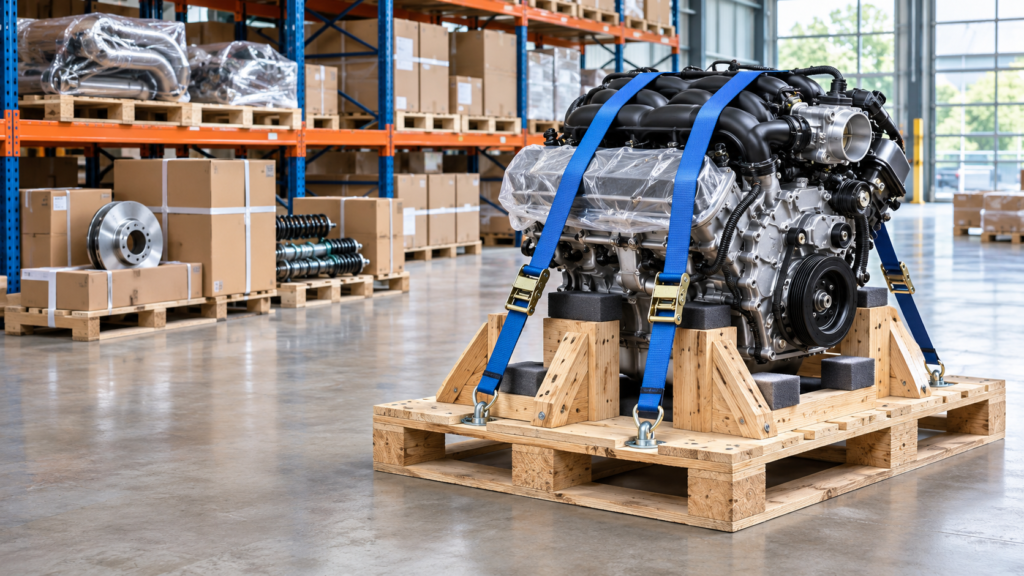
A replacement engine, gearbox, transmission, wheel set or other large automotive component is not an ordinary parcel. Weight, liquids, sharp edges and shifting loads can create damage or safety risks. This guide explains how to prepare automotive parts for freight shipping, what information a logistics coordinator needs, and when specialist handling may be necessary.
1. Match the packaging to the part
Small, sturdy components can sometimes travel in protective corrugated boxes with enough internal cushioning. Heavy or unusually shaped items may require a pallet, rigid crate or engineered packaging. A carton that works for a light plastic trim piece will not secure an engine block.
FedEx’s freight packaging guidance emphasizes proper load distribution, stability and securement. Use it as a general reference, while following the specific requirements of the actual freight carrier handling your item.
2. Prepare an engine or transmission for transport
- Confirm carrier acceptance first. Ask what fluids and residues are permitted, which must be drained, and what documentation or cleaning is required. Do not assume an engine containing oil, fuel or coolant can ship as standard freight.
- Protect ports and openings. Cap or seal approved openings and guard exposed shafts, fittings and fragile sensors.
- Use stable support. Position the unit on a suitably rated pallet or in a strong crate designed for its mass and center of gravity.
- Prevent movement. Use rated straps and appropriate blocking or bracing. Do not rely on stretch film as the only restraint.
- Record condition. Photograph the part, its serial or identification numbers where relevant, and its final packaging before pickup.
Transportation of parts with fuel, batteries, solvents or other regulated materials can trigger hazardous-material rules. The actual carrier must confirm acceptance and applicable packaging requirements. See FedEx’s automotive-parts shipping guidance for common preparation issues.
3. How to package common motor parts
Engines and gearboxes
Support the assembly on a sound skid or crate, immobilize it, protect protruding connections and verify the loaded weight. Ask about forklift or liftgate requirements at both ends.
Body panels and bumpers
Use shaped foam, corner protection, rigid external packaging and void fill. Prevent painted surfaces from rubbing against other material during vibration.
Wheels and tires
Cover delicate wheel faces, separate metal surfaces, and follow the carrier’s rules about wrapping or boxing tires. Set quantities, dimensions and total weight accurately.
Electrical and battery components
Identify battery chemistry and any dangerous goods classification before accepting a booking. Some items require specialist handling and may not be eligible for a standard service.
4. Give accurate weight and dimensions
For a palletized shipment, quote the packed length, width and height—not just the bare part’s size. Include the pallet or crate weight. Freight quotations can depend on route, dimensions, weight, handling needs, accessibility and service availability. A few missing inches or an omitted liftgate request can affect a quote.
5. Plan pickup and delivery access
Confirm whether the origin and destination have a loading dock or forklift, and whether a residential pickup or delivery, limited-access site or liftgate might be needed. Label the shipment as the selected carrier requires, and keep a copy of the packing photos and shipment documentation.
6. Track meaningful milestones
Use the GoCargo shipment tracking page when a tracking reference has been issued. Shipment updates show the latest status and location supplied by operations or a transport partner; they should not be interpreted as uninterrupted live GPS transmissions. If you need handling clarification or notice a delivery issue, submit a package question through the tracking page or contact support.
Frequently asked questions
Can you ship a used engine?
Possibly, subject to carrier acceptance, accurate description, fluid-preparation requirements and packaging assessment. We would need the origin, destination, condition, weight, dimensions and photos to evaluate a request.
Does an engine always need a wooden crate?
No universal rule applies. The carrier and part’s weight, shape, securement and exposure determine whether an appropriate palletized arrangement or crate is needed. Crating guidance can help you understand the tradeoffs.
Are rates fixed per car part?
No. GoCargo discusses the actual shipping rate by email after reviewing shipment details and available service options.
Need to ship an engine, transmission or other motor parts? Request a personalized freight quote with photos, the packed dimensions, approximate weight and route. We’ll assess suitable next steps without promising acceptance for restricted goods.
Further reading: FedEx freight packaging guide and FedEx automotive parts guide. Educational references only; GoCargo is not represented as affiliated with FedEx.