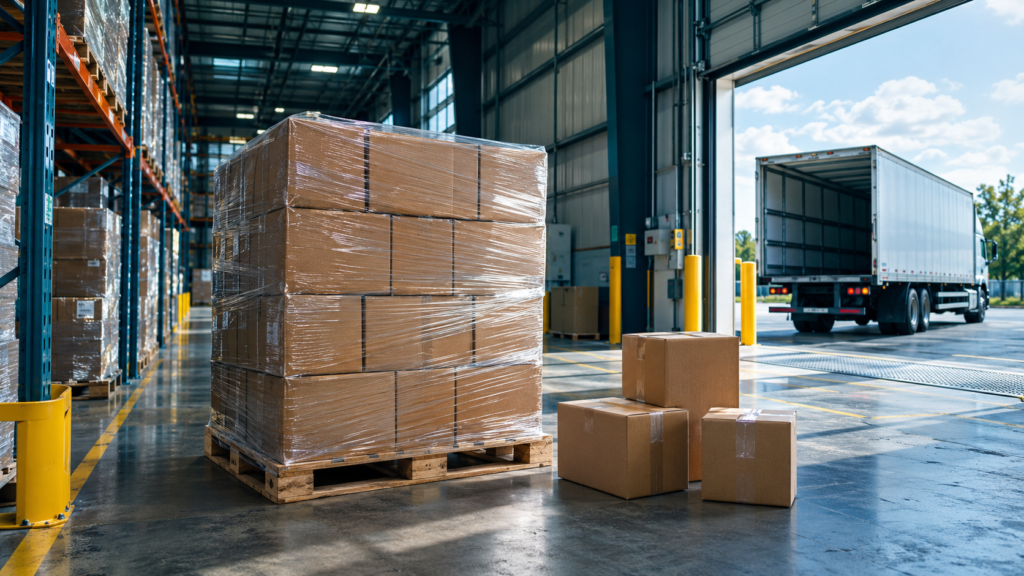
A single carton can often move through a parcel network. Ten heavy cartons of commercial inventory may be better prepared together on a pallet. The distinction between parcel shipping and less-than-truckload (LTL) freight affects packaging, equipment, handoff and pricing—and choosing the right path can prevent unnecessary handling problems.
What is parcel shipping?
Parcel services are built around individual packages processed through a network of sorting facilities and delivery vehicles. Each box needs to comply with the carrier’s size, weight, content and packaging requirements. Parcels make sense for many smaller items, especially when they can safely travel as stand-alone cartons. Oversize surcharges and restricted-item rules can change that calculation.
What is LTL freight?
LTL means a shipment shares truck space with freight from other customers. The shipment is frequently palletized or crated so forklift operators can move it as a unit. The equipment, handling points and delivery appointment may differ from ordinary small-package service. Freight dimensions, weight, class or density, route and available services influence the quote. Not every route or product is eligible.
When a pallet makes sense
- Several cartons are headed to one recipient and can be secured together.
- An engine, transmission or industrial component needs stable, reinforced handling.
- The assembled shipment is too bulky or heavy for a standard parcel option.
- Commercial receiving has forklift or loading-dock access.
- The value of reduced loose-piece handling may outweigh extra freight preparation.
One pallet is not always cheaper than multiple parcels. Ask for a quote under both eligible approaches when the shipment is near the service boundary. FedEx’s freight packaging guide explains general preparation principles.
How to build a transport-ready pallet
Choose a pallet that is sound, dry, suitable for the load and accepted by the carrier. Place heavier packages low, distribute weight evenly and avoid dangerous overhang. Use adequate stretch wrap, banding or approved restraints to make the goods and pallet move as one unit. Heavy metal pieces need engineered blocking and bracing, not just plastic film. The final overall dimensions include the loaded pallet itself. For individual packaging, keep cartons sealed and protect corners.
Receiving access and extra services
Freight often requires more information than a parcel label: commercial or residential address, loading dock, forklift availability, liftgate needs, limited access, appointment window and safe unloading arrangements. These requirements can create additional charges or route constraints. A carrier may decline an unsafe or improperly prepared load, even if collection was scheduled.
Details to include in a freight quote request
- Describe the commodity and whether it is new, used, fragile or regulated.
- State the number of pallets or crates and the item count.
- Provide combined loaded dimensions and actual weights, with photos.
- Identify required pickup/delivery equipment and access restrictions.
- Share the origin, destination, preferred dates and any insurance questions.
Frequently asked questions
Can a heavy item move without a pallet?
Sometimes, but only if the chosen service approves the packaging, handling and equipment. Engines and heavy machinery frequently need suitable crating or pallet protection.
Does freight include inside delivery?
Do not assume it. Standard handoff often differs from residential doorstep service; quote inside delivery or other assistance separately where offered.
See GoCargo road freight or request a tailored freight quote with cargo photos and access details.